Get in Touch with BBP

ISO 9001 · ISO 2858 · IEC 60034-30-1 (IE3) · CE · Decade-level vertical integration
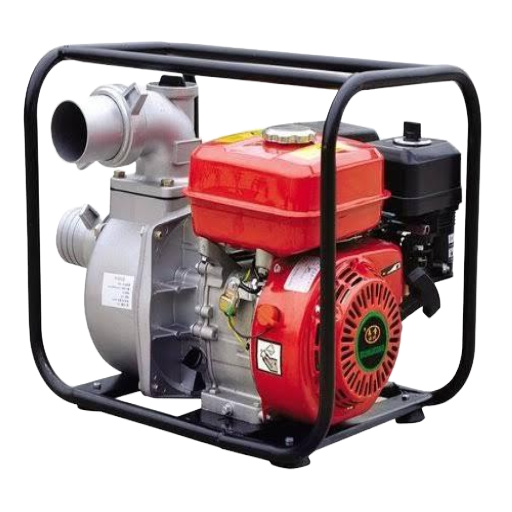
Agriculture Pump
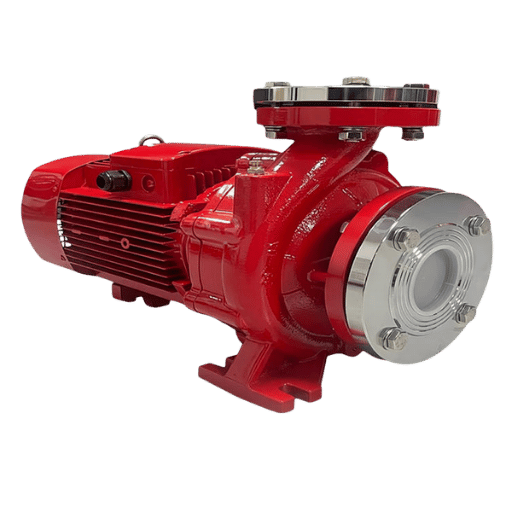
Agriculture Pumps for Farm Irrigation and Water Transfer — Q50 to Q300 Series
Nine centrifugal pump sizes designed for farm irrigation, livestock water supply, and liquid fertilizer transfer. Flow from 3.4 to 1,200 m³/h, head from 3.6 to 132.5 m, power from 0.55 to 132 kW — sized to match drip, sprinkler, center pivot, and flood agricultural irrigation without oversizing or starving the system.
- ISO 2858 End-suction dim.
- 14 days Ship from stock
- MOQ 1 Stock models
- Full Match Drip, Sprinkler & Pivot
×
![Zoomed Pump Image]()
All Buyers
Crop-Critical Downtime Ends Here — How BBP Agriculture Pumps Solve Irrigation’s Biggest Problems
A pump that fails halfway through a dry week costs more than a pump. It costs yield — and in row crops or citrus that loss is permanent for the season. But the most common complaint on farm forums is not catastrophic failure; it is pumps that lose prime at the worst possible moment, or cheap impellers that wash out after one season of sediment-heavy surface water.
An agriculture pump is a centrifugal, diesel-driven, or submersible water pump designed for farm irrigation, livestock water supply, and liquid fertilizer transfer. The end-suction centrifugal pump is the workhorse type because it consistently balances flow rate, total dynamic head, and maintenance cost across surface water, shallow wells, ponds, and canal intakes in a way that diesel and submersible pumps struggle to match at the same horsepower. Where farmers lose money is in the gap between a pump that meets the spec sheet on day one and one that still meets it after 8,000 operating hours.
BBP closes that gap by controlling every manufacturing step in a single facility — casting, heat treatment, machining, assembly, coating, and testing. Our Q-series uses cast-iron casings with hardened impeller geometry for abrasion durability, self-priming configurations for surface water pickups, and IE3 electric motors that cut operating expense against diesel alternatives. The result is an agriculture pump line built to survive the specific failure modes farmers actually report — not just the ones catalog pages describe.
BBP Agriculture Pump Series — Q50 to Q300 Model Selection Guide
Nine frame sizes cover anything from a 5-acre greenhouse drip line to 1,200 m³/h flood irrigation on a large farm. Every Q-model is built on the ISO 2858 end-suction dimensional standard, which means flange spacing, shaft center height, and foot bolt layout drop into any existing ISO 2858 baseplate — a real issue when you are retrofitting rather than building a fresh pump pad.
| Model | Flow (m³/h) | Head (m) | Power (kW) | Typical Best-Fit Application | Stock / Lead Time |
|---|---|---|---|---|---|
| Q50 | 3.4 – 15 | 8 – 30 | 0.55 – 11 | Greenhouse drip / livestock water | 14 days |
| Q65 | 6.8 – 30 | 3.7 – 126.8 | 0.55 – 45 | Small-farm sprinkler / pond transfer | 14 days |
| Q80 | 12.6 – 60 | 3.6 – 128 | 0.55 – 45 | Mid-farm sprinkler / booster pump | 14 days |
| Q100 | 27.3 – 120 | 4.3 – 115 | 1.1 – 90 | Drip mainline / solid-set sprinkler | 14 days |
| Q125 | 30 – 240 | 8.5 – 132.5 | 2.2 – 110 | Center pivot / high-head well jet | 14 days |
| Q150 | 99 – 240 | 12.4 – 115.5 | 5.5 – 110 | Large pivot / drip irrigation mainline | 14 – 21 days |
| Q200 | 157 – 460 | 14.2 – 68 | 15 – 90 | Flood irrigation / canal transfer | 14 – 21 days |
| Q250 | 200 – 760 | 22.6 – 52 | 45 – 132 | Large flood / surface water supply | 21 – 30 days |
| Q300 | 530 – 1,200 | 21.9 – 38 | 75 – 132 | High-volume flood / rice paddy | 21 – 30 days |
Engineering Notes for the EN Reader
Every Q-frame runs dual-speed performance curves — 1450/1750 rpm for long-life continuous duty on center pivot and flood agricultural irrigation, and 2950/3600 rpm for compact high-head drip and sprinkler systems. Close-coupled and back-pullout variants are both available; back-pullout lets you service the impeller without disturbing piping or suction inlet fittings, which matters when the pump pad sits inside a cramped irrigation pump house.
Self-priming models in the Q65 and Q80 frames handle up to roughly 6 m static suction lift without an external priming valve — a practical advantage for portable canal intakes on a tractor-pulled pump cart or PTO-driven trailer.
Procurement & Lead Time Notes
For the PROC reader, the same table tells a different story: minimum order quantity is 1 on any stock Q-model, and initial inventory of Q50 through Q100 frames ships within 14 days from our Beijing warehouse. Larger Q200 to Q300 frames are built to order with 21–30 day lead time, because flood-irrigation pumps are not shelf-stocked in every voltage and impeller trim.
OEM variants — custom casing metallurgy, special impeller geometry, or non-standard motor flanges — add 30 to 45 days and benefit from our in-house foundry capacity rather than subcontracted casting.
EN · MGR · PROC
Centrifugal Pump for Agriculture vs. Diesel End-Suction vs. Submersible — Data-Driven Comparison
Picking the right pump type comes down to three variables: water source depth, grid availability, and operating hours per season. Here is a head-to-head on the parameters that actually drive the quote.
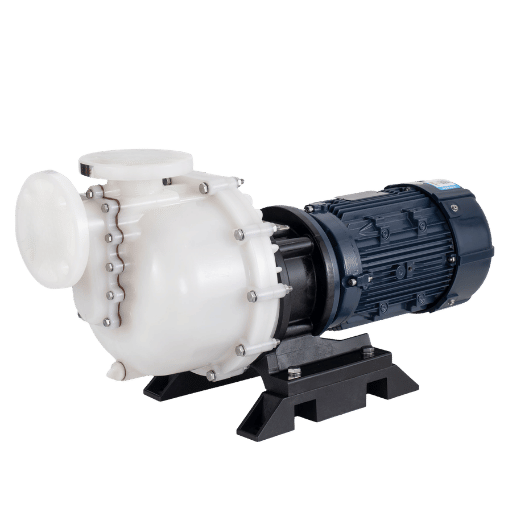
Electric Centrifugal (BBP Q-Series)
- Flow range 3.4 – 1,200 m³/h
- Head range 3.6 – 132.5 m
- Best water source Surface water, shallow well, pond, canal
- Priming Self-priming or flooded suction
- Typical OPEX (50 HP, 80 days × 12 hr/day) ≈ $3,580 / season
- Annual maintenance (% of CAPEX) ≈ 2% (electric motor)
- NPSH sensitivity Medium — designed for surface water NPSHa
- Fuel tank / infrastructure Grid tie-in (existing farm service)
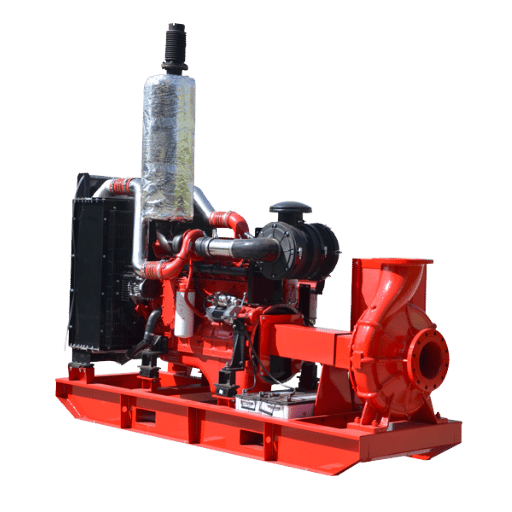
Diesel End-Suction
- Flow range Typically 50 – 800 m³/h
- Head range 20 – 90 m (single stage)
- Best water source Remote source without grid
- Priming Manual or foot-valve prime
- Typical OPEX (50 HP, 80 days × 12 hr/day) ≈ $7,200 / season
- Annual maintenance (% of CAPEX) ≈ 6% (diesel engine)
- NPSH sensitivity Medium
- Fuel tank / infrastructure Fuel tank + refueling logistics
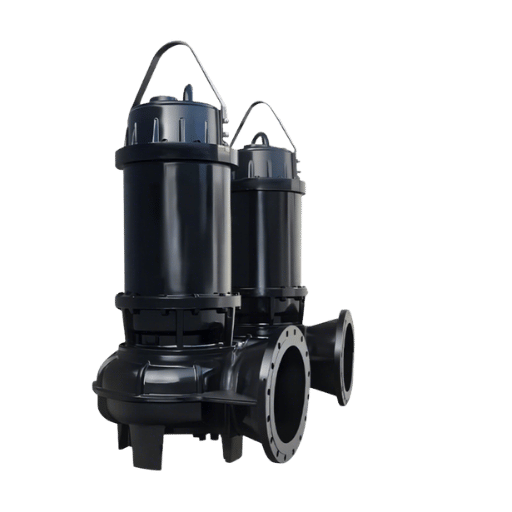
Submersible
- Flow range Typically 1 – 200 m³/h
- Head range 10 – 300+ m (multi-stage)
- Best water source Deep well, borehole > 10 m
- Priming Always submerged — no priming
- Typical OPEX (50 HP, 80 days × 12 hr/day) ≈ $3,580 / season
- Annual maintenance (% of CAPEX) ≈ 2 – 3%
- NPSH sensitivity Low — submerged
- Fuel tank / infrastructure Power cable down the well
Customer Results — 300-Acre Citrus Groves to 1,200 m³/h Flood Irrigation
Three deployments that tell you what the spec sheet does not. Each case reflects a real pump sizing conversation — model chosen against flow, head, and water source conditions rather than brand loyalty.
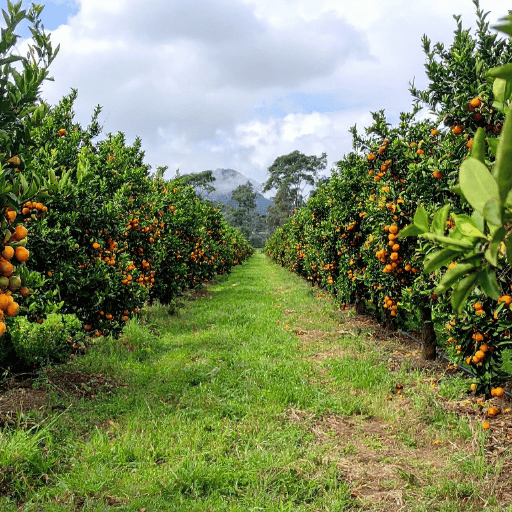
300-Acre Citrus Grove — Drip Irrigation Retrofit
Context The center pivot was undersized for the acreage expansion, and the downstream drip mainline was starving laterals furthest from the pump pad.
Solution Q150 self-priming centrifugal pump, 120 m³/h at 32 m head, matched to the existing pressure-control valve and filter set.
Result Uniformity coefficient improved across the far laterals, and the grove shifted from scheduled midday top-up irrigation to a single pre-dawn cycle — cutting evaporation losses and pump runtime.
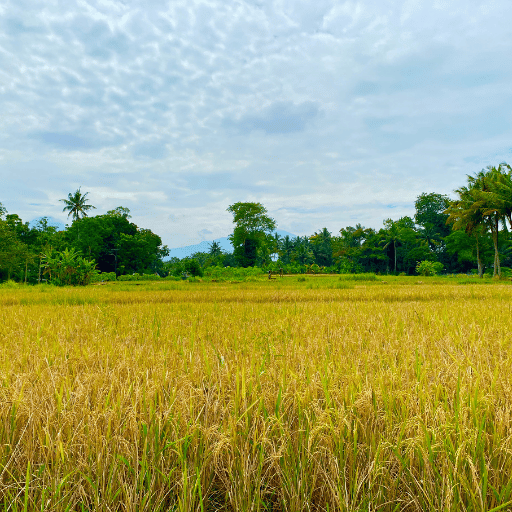
1,200 m³/h Flood Irrigation — Rice Paddy Operation
Context An aging diesel-driven set struggled with suction lift during dry-season drawdown. The farm wanted to eliminate refueling logistics and cut unplanned downtime.
Solution Q300 close-coupled centrifugal, 1,200 m³/h at 22 m head, running on an IE3 motor, grid-tied with a soft-starter.
Result Seasonal operating cost fell roughly in line with the ~50% industry benchmark for grid-electric over diesel. Fuel tank and engine service were retired from the maintenance schedule.
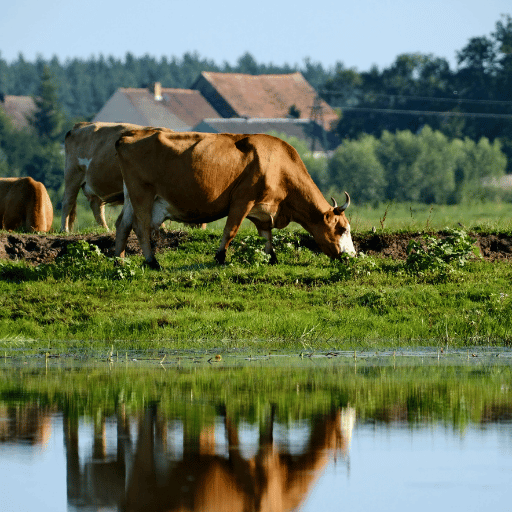
Livestock + Pond Transfer — Sediment-Heavy Surface Water
Context A 120-head livestock operation replaced a consumer-grade well jet pump every season because the aluminum impeller could not handle surface pond water with debris and seasonal algae.
Solution Q65 cast iron centrifugal, 30 m³/h at 40 m head, semi-open impeller for solid passage, mounted with foot valve and strainer at pond intake.
Result Two full seasons on the original impeller and bearing set, with scheduled service intervals replacing unscheduled replacements.
Across these deployments the common thread is that the pump was sized to the total dynamic head and flow rate of the application — not to the nameplate horsepower of the last pump that failed. That approach matters more than brand loyalty, and it is why we ask for your source depth, discharge elevation, and pipe schedule before we quote a model number.
PROC · EN
Certified to ISO 2858, IEC 60034-30-1 (IE3), and CE — Quality Proof, Not Promises


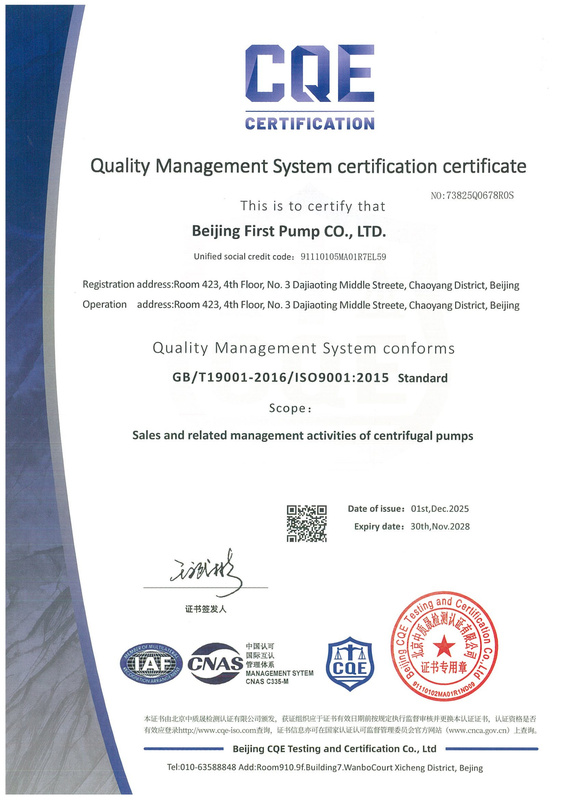

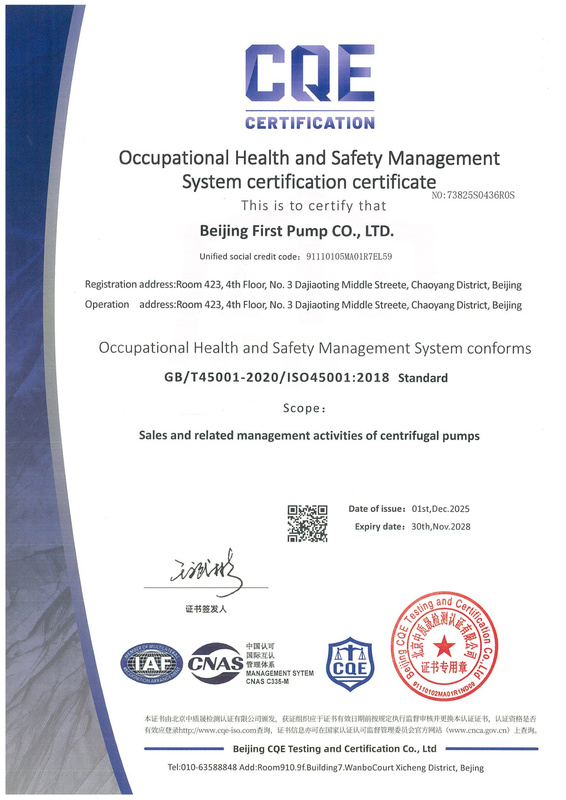

ISO 9001
Quality Management System
ISO 2858:1975
End-suction 16 bar dimensions
IEC 60034-30-1
IE3 motor efficiency
CE Marking
EEA market compliance
ANSI/HI 14.6
Rotodynamic performance test
Certifications are only useful when you know what they actually buy you. ISO 2858 means the flange spacing and shaft height of a Q-series pump match any other ISO 2858 pump on your existing baseplate — retrofit without custom piping work. IEC 60034-30-1 IE3 motors deliver the efficiency tier that most European and increasingly North American utility rebates require, which changes the payback math on an electric conversion. ANSI/HI 14.6 is the rotodynamic pump performance test standard used to verify the flow-head curve published with each spec; it is the reason our curves are worth quoting against. Full compliance documentation — motor test reports and factory hydraulic test data — is available on request, and we do not ship without it.
×
![Enlarged Certification]()
Agriculture Pump Procurement Guide — Price Factors, 14-Day Ship, MOQ 1
What drives the landed cost of a Q-series pump is not a single line item — it is the intersection of size, motor, material, and logistics. Here is how the quote breaks down and where a buyer can adjust.
Pricing Factors
Frame size and power
A Q50 entry-level centrifugal sits at the low end of the range; a Q300 flood-irrigation pump with a 132 kW motor sits at the high end. The difference is capacity, not brand premium.
Impeller and casing material
Cast iron is the default; stainless steel impellers and casings for corrosive or acidic water sources are priced separately.
Motor spec
IE3 is the standard; premium-efficiency IE4 motors are available for regions with utility rebates or strict energy codes.
Accessories
Variable-frequency drives, pressure control valves, couplings, and baseplates are optional line items.
Volume / distributor tier
Distributor pricing applies from 10+ units; project tier applies above 50 units.
Lead Time, MOQ, Warranty
Ship in 14 days from stock
Applies to Q50 through Q150 in standard cast iron with IE3 motors. Larger Q200–Q300 frames run 21–30 days build-to-order.
MOQ 1
No bulk minimum on any stock Q-model, which matters for distributors building a sample inventory and for farms replacing a single failed pump mid-season.
Warranty 12 months minimum
With extended options available for project orders. Coverage includes motor, casing, and drive train; wear parts (mechanical seal, shaft sleeve) follow the manufacturer's life-expectancy schedule.
Worldwide spare parts
We stock impellers, bearings, seals, and casings for every major Q-model, drawing on the shared supply chain we built for our slurry pump line. A replacement impeller ships on the same lead-time rules as the pump itself.
Buyer Advisory
Confirm Voltage & Phase
Confirm that the motor voltage and phase match your farm service. A 3-phase 400 V IE3 motor will not run on a single-phase 230 V service without a VFD conversion.
Specify Written Warranty
Specify warranty terms in writing. Industry research indicates roughly one in five pumps shipped without written warranty requires repair in the first operating year — do not accept a handshake agreement.
Request Test Data
Request factory hydraulic test data with the order. A published curve and a unit-specific test report are not the same document.
Ready to Size Your Pump?
For a detailed quotation based on your site parameters — source depth, discharge elevation, pipe schedule, power service — contact our engineering team. We return a model recommendation and a line-item quote within 24 hours on business days.
Contact EngineeringAgriculture Pump Engineering & Sizing Tools
Pump Sizing Calculator — Match a BBP Q-Model
Enter your required flow rate, total dynamic head, and water source depth. We return the closest Q-model match from the 9-size catalog.
Access Calculator
Diesel vs Electric Irrigation Pump TCO Calculator
Compare 5-year operating cost between a diesel-driven and electric centrifugal agriculture pump for your duty point. Based on industry-average fuel and electricity rates; adjust for your region.
Access Calculator
Total Dynamic Head (TDH) Calculator
Compute the required pump head for your farm irrigation system. Add static elevation, operating pressure, and friction loss to get TDH in meters.
Access Calculator
All Buyers
Frequently Asked Questions
Centrifugal pumps are the workhorse for surface water and shallow wells in farm irrigation. For deep wells beyond 10 m, vertical turbine or submersible pumps take over. For low-lift high-volume flood and canal irrigation, mixed-flow or propeller pumps are preferred. For drip irrigation requiring 15–30 PSI tight pressure, an electric centrifugal paired with a pressure control valve is the standard.
For most farm irrigation applications, an electric centrifugal pump sized to your total dynamic head (TDH) and flow rate is the best value — lower operating cost than diesel, simpler maintenance than submersible. Our Q-series covers 3.4 to 1,200 m³/h, which spans drip irrigation for a 5-acre greenhouse up to 1,200-acre flood irrigation.
Size is driven by two numbers: required flow rate (GPM or m³/h) and total dynamic head (TDH). Flow depends on your irrigated area and system type — drip needs less, center pivot needs more. TDH sums elevation head, friction loss, and operating pressure. A center pivot with a big-gun sprinkler typically runs 85 PSI (≈ 60 m TDH) at 250+ GPM; drip irrigation runs 15–30 PSI (10–20 m TDH) at much lower flow. Send us your acreage and source depth and we will match a Q-model within 24 hours.
Service life depends on water quality and duty cycle. A cast-iron centrifugal pump handling surface water typically delivers 8,000 to 12,000 operating hours before major overhaul — roughly 6 to 8 seasons of heavy irrigation duty on a well-maintained pad. In sediment-heavy or acidic water, cheap pumps with weak seals and soft-metal impellers fail inside a single season, and most of those failures trace to mechanical seal choice rather than the impeller itself. That is why BBP specifies industrial-grade mechanical seals, hardened shaft sleeves, and heavy-duty bearings across the Q-series, and why we ship factory hydraulic test data with every unit — so you can benchmark real-world performance against the spec sheet on day one and watch drift over the service interval.
An agricultural pump is a centrifugal, submersible, or diesel-driven water pump built for farm irrigation, livestock water supply, and liquid fertilizer transfer. The workhorse type is the end-suction centrifugal pump because it handles surface water from ponds, streams, canals, and shallow wells with a practical balance of flow, head, and maintenance cost.
TDH is the total equivalent height the liquid has to be lifted. A practical formula: TDH = (P2 − P1) × 2.31 × SG + static elevation + friction loss (suction) + friction loss (discharge). In plain language — add the vertical distance from water surface to discharge point, the pressure you need at the sprinkler or drip emitter, and the friction inside the pipe. Give us those three numbers and we will recommend an exact Q-model with matching NPSHr.
Yes. Casting, heat treatment, machining, assembly, coating, and testing all happen in our own facility — the definition of real OEM, not badge reselling. We manufacture custom impellers, casings, and shafts for distributors and engineering projects worldwide. Send us a drawing or sample and our engineering team returns a manufacturability report within 3 working days.
Match a Q-Model to Your Farm in 24 Hours
Send us your flow requirement, total dynamic head, and water source depth. Our application engineers return a model recommendation with pricing, lead time, and ISO 2858 drawings — no obligation, no stock-quote filler.